A bulk-production approval should be more than a quick visual check. For technical outerwear, the approved sample becomes the reference that purchasing, development, quality control and the factory all use when questions arise. A clear review reduces the risk of avoidable changes after fabric has been cut, trims have been ordered or size grading has started.
The goal is not to make a sample look perfect in isolation. The goal is to confirm that the garment can be repeated consistently at the intended quality level, in the planned size range, colourways and order quantity.
Start with an approval standard, not personal preference
Before reviewing the sample, turn the brief into an approval sheet. List the intended end use, target retail price, fit direction, fabric construction, performance claims, required colourways, packaging requirements and the points that cannot change in bulk. This gives every reviewer the same decision criteria.
Identify the exact sample stage: development sample, fit sample, size-set sample, pre-production sample or shipment sample.
Record the sample size, fabric lot, trim source and any temporary substitutions used during development.
Separate must-fix issues from preferences that can wait for a future style update.
Set a written deadline for comments so material and production planning remain realistic.
1. Verify fit and movement in the intended use case
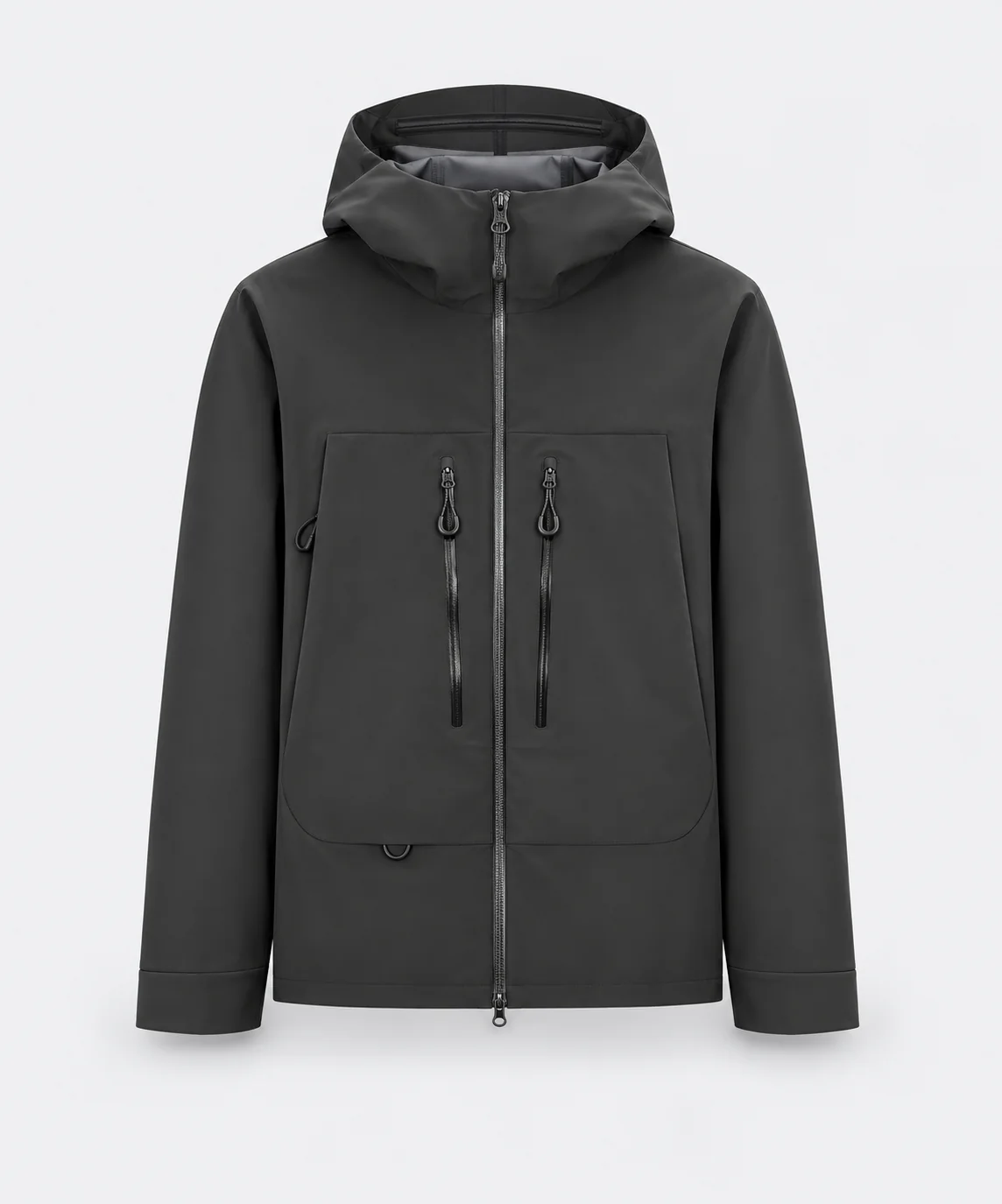
Fit should be checked on a wearer or fitting form that matches the target customer, rather than only on a hanger. Ask the wearer to reach forward, raise both arms, bend, sit, zip the jacket fully and layer it over the planned midlayer. On a shell jacket, sleeve lift, hood adjustment and back length often reveal more than chest measurement alone.
Measure the garment against the approved specification and record tolerances. For graded styles, inspect more than one size before bulk approval. A comfortable medium does not prove that the smallest and largest sizes will retain the same balance at the shoulder, chest, hem and sleeve.
2. Inspect materials, seams and functional details
A technical jacket is a system of fabric, membrane or coating, seam construction, closures and adjustment components. Review the actual materials used in the sample, not only swatches. Colour, handle, face texture, stiffness and noise can shift between lab dips, sample meterage and bulk production lots.
Confirm the shell fabric, backing or lining, insulation weight and reinforcement zones against the bill of materials.
Open and close every zipper repeatedly; check zipper garages, puller direction and pocket bag access.
Check seam tape width, coverage, adhesion at curves and clean finishing around hoods, pockets and cuffs.
Review drawcord exits, cord locks, hook-and-loop closures and elasticated areas for both usability and durability.
Compare logos, labels, care instructions and packaging artwork with the approved files.
3. Match performance claims to the actual construction
Avoid approving a claim simply because it appears in a marketing brief. A water-resistant garment, a seam-sealed waterproof shell and an insulated all-weather jacket require different construction evidence. If a fabric supplier provides test data, confirm the test method, the finished-fabric condition and whether the result applies to the selected colour or coating. If a brand needs independent testing, define the test plan before bulk material is released.
For a waterproof product, review more than a membrane specification. Critical areas include taped seams, pocket openings, front zipper protection, hood shaping and any needle holes created by branding or reinforcement. For breathable garments, consider the entire layered system and the intended activity level rather than presenting one fabric number as a complete comfort guarantee.
4. Run a production-readiness review
A sample can be attractive yet still be difficult to manufacture at scale. Ask the factory to identify operations that require special handling, tight tolerances or manual rework. These usually include seam-tape application, bonded pocket construction, multi-layer hood assemblies, contrasting panels and reflective or heat-transfer logos.
The most useful approval note states the issue, location, expected result, owner and due date. Mark photographs or drawings when possible. Vague comments such as 'make it better' or 'adjust the hood' create different interpretations at the production line.
5. Release bulk only after the key references agree
Before a bulk release, align the approved sample with the purchase order, graded measurement chart, bill of materials, artwork files, packing instructions and inspection standard. If one document differs, resolve it before cutting. The pre-production sample should represent the materials and workmanship planned for bulk, rather than a development approximation.
Frequently asked questions
Is one approved sample enough for a technical jacket?
Usually no. A development sample can confirm direction, while a size-set sample checks grading and a pre-production sample confirms bulk-ready materials and construction. The right sequence depends on style complexity and order risk.
What should be photographed during approval?
Photograph front, back, key construction details, labels, colour references, seam tape, zipper areas and any approved deviations. These photographs create a practical reference for inspection discussions.
When should a third-party inspection be planned?
Plan it before production begins. Define the inspection point, sampling method, critical defects and shipment release criteria in the purchase order or quality agreement.
Next step
If you are preparing a technical outerwear sample, send RASKOR your specification, reference garment or target use case. A clearer approval checklist at sample stage gives your team a stronger basis for quotation, production planning and bulk inspection.