
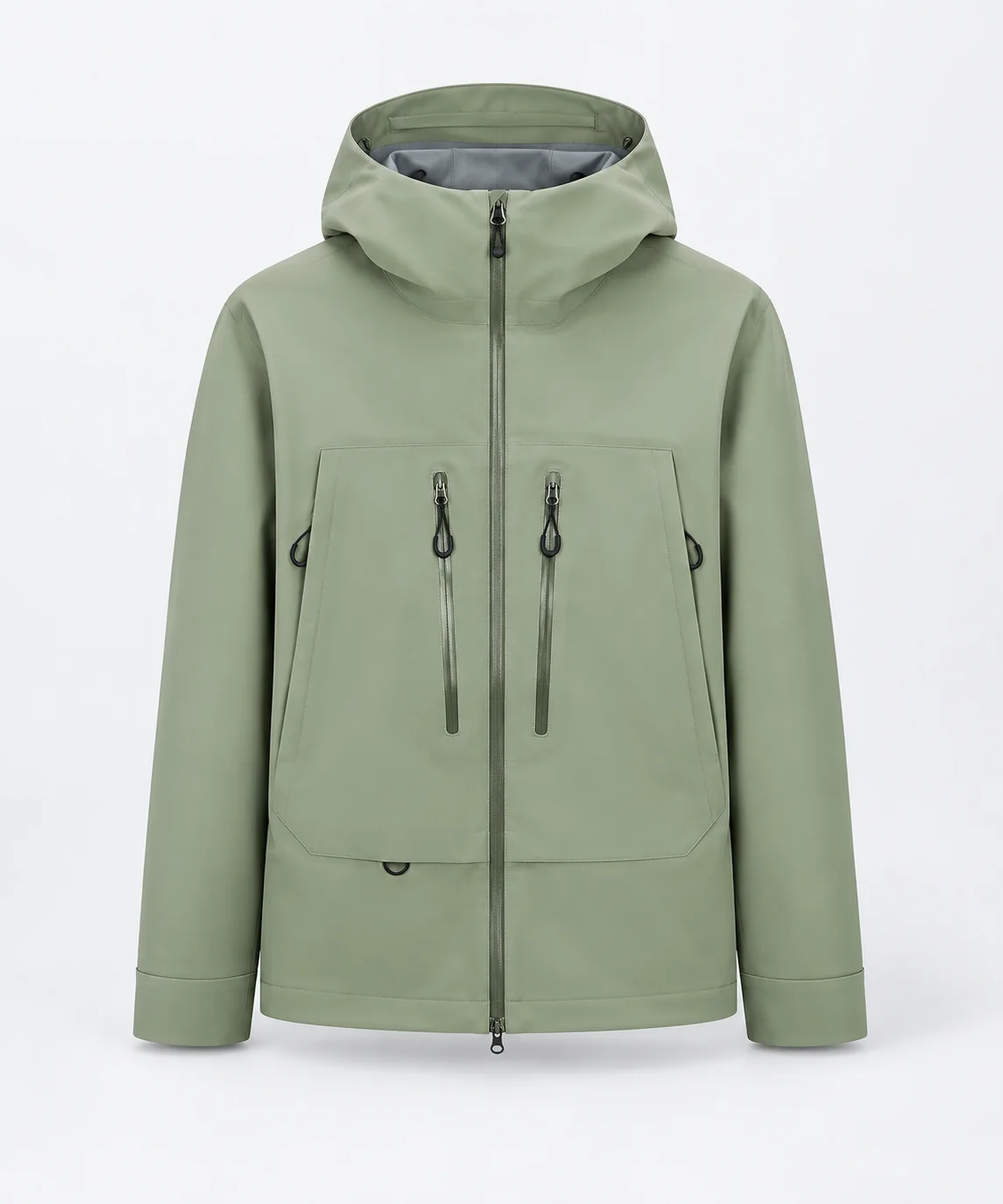
A strong outerwear range is not simply a set of jackets in different colours. Each style should have a reason to exist: a weather scenario, wearer, price position or technical function that is clear to both the sales team and the factory. Defining those roles early makes sampling more efficient and reduces overlap between styles.
For new brands and expanding private-label programs, the most practical starting point is a compact range architecture. Choose a few recognizable product roles, make their differences easy to explain, then develop the colour, trim and branding system around them.
Build the range around customer use, not fabric names
Customers buy solutions for situations: travel, weekend hiking, commuting, team uniform use, cold weather layering or all-day work outdoors. A material category such as 'softshell' is useful internally, but it should not be the only basis for the range. Define who the jacket is for and what problem it solves first.
Weather shell: a protective outer layer for wind and rain, often worn over a separate insulating layer.
Softshell or active layer: a flexible, lower-bulk option for movement and changeable conditions.
Insulated jacket: a warmth-focused layer for cold conditions, with the shell construction chosen for the intended exposure.
System jacket: a shell and insulated component designed to work together or separately.
Special-use style: workwear, travel, uniform or activity-specific outerwear with a clear functional requirement.
Create a product-role matrix
Before requesting samples, give each style a one-page role definition. Include the target consumer, season, climate, main use, target retail position, fit direction, preferred materials, key construction features and commercial objective. The matrix quickly exposes duplicated styles. If two jackets solve the same use case at the same price, one needs a clearer reason to remain in the line.
A useful range often has an opening price style, a core technical style and a more feature-rich hero style. This does not mean every brand needs three versions of the same jacket. It means the customer should understand the difference in function, features and value as the range steps up.
Decide where consistency matters
A collection feels intentional when repeated elements are genuinely useful. Shared logo placement, zipper language, label hierarchy, pocket geometry or colour accents can connect styles without making them identical. Standardizing selected trims can also simplify sourcing and help protect visual consistency across colourways.
Do not standardize by habit. A storm shell may need a different hood adjustment or pocket architecture from a casual insulated jacket. Keep shared components where they support the product system, and allow differences where the use case demands them.
Plan colour and material with production in mind
Colour selection affects more than marketing. It can influence fabric availability, minimums, colour matching, lead time and the consistency of trims across multiple styles. Start with a core palette that can carry several products, then select a small number of seasonal or accent colours. Review colour on the actual shell material and under practical lighting before sign-off.
For materials, balance performance with the hand feel, noise, stretch, weight and cost expected by the customer. Make sure each fabric decision supports the intended product role. A high-specification fabric may be unnecessary for a commuter piece, while a low-cost construction may not be sufficient for a shell positioned around sustained wet-weather use.
Use a development calendar that leaves room for decisions
Outerwear development includes lab dips, material booking, patterns, samples, fit comments, grading, trim confirmation and production planning. Work backward from your desired delivery window and allow time for decisions that cannot be compressed later, such as material lead time, sample revision and testing. A late brief often becomes a rushed choice rather than a faster project.
Brief and range plan: define product roles, customer, target price and target quantity.
Material and trim direction: confirm candidate fabrics, colour options and key components.
Development and fit samples: assess silhouette, movement, construction feasibility and brand direction.
Pre-production approval: align approved materials, measurements, artwork, packing and inspection criteria.
Bulk production and shipment: monitor agreed checkpoints and review final packing before release.
Frequently asked questions
How many styles should a first technical outerwear collection include?
Start with the number of styles you can clearly position, approve and support. A smaller range with defined product roles and well-managed samples is often stronger than a broad range with overlapping jackets and rushed decisions.
Should every style use the same shell fabric?
Not necessarily. Shared fabrics can simplify the range, but each product should still meet its intended use. Use a common material when it supports several roles; select a different construction when protection, mobility, warmth or hand feel requires it.
When should a factory be involved in range planning?
Bring the factory in once you have a clear brief. Early technical input can identify construction risks, material availability questions and sampling priorities before you invest in multiple incomplete prototypes.
Next step
If you are outlining an outerwear range for the next season, send RASKOR the target market, product list, reference images and estimated quantities. We can help turn the range into a structured development brief for sampling and quotation.