
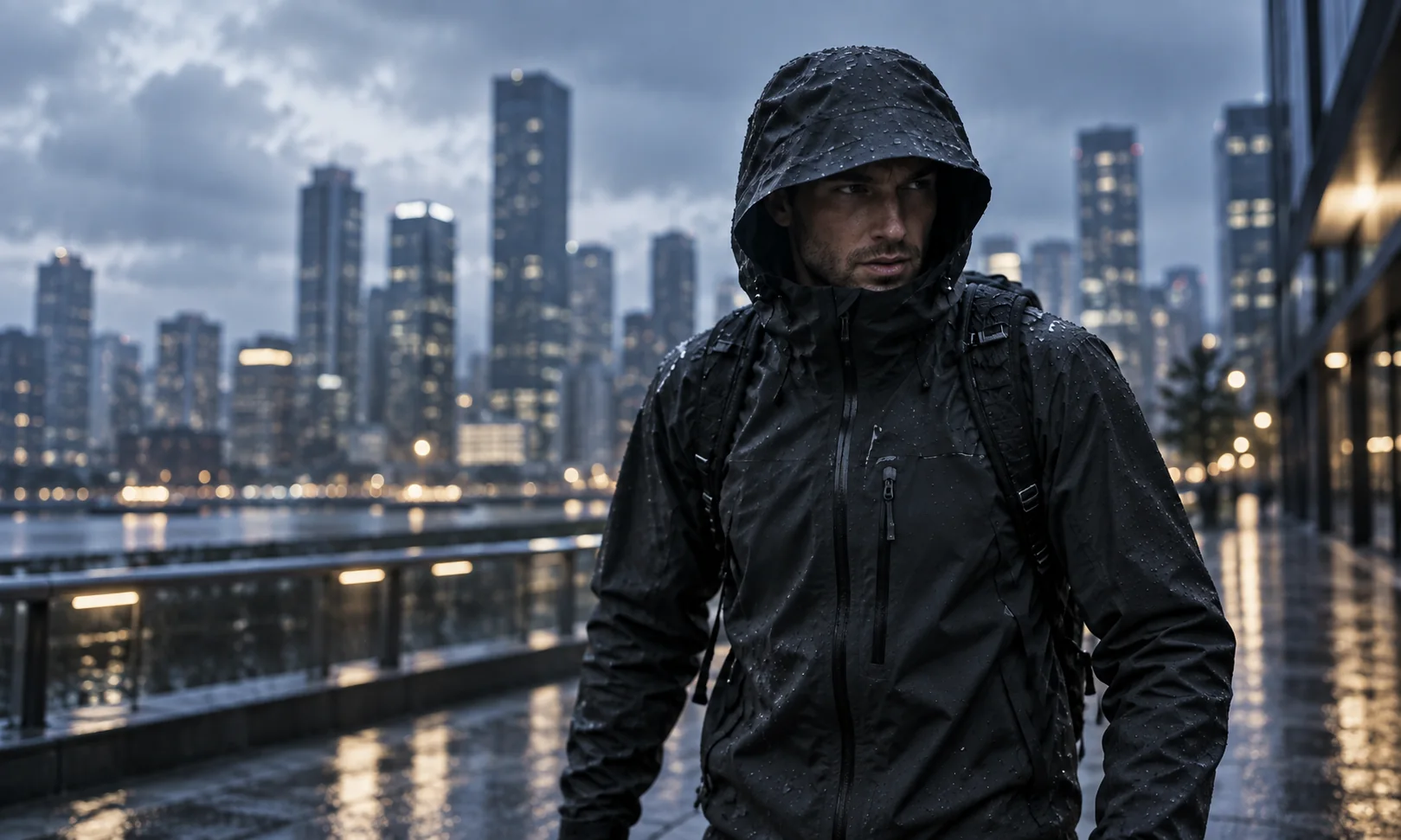
Urban outdoor is useful to a brand only when it becomes more than an aesthetic label. An AW26 jacket may need to look appropriate on a train platform, work over office layers, handle a wet bicycle commute and still feel credible on a weekend walk. Those situations share some needs, but they do not require the same product as an exposed-mountain shell.
The opportunity for private-label buyers is to combine a clean city silhouette with selected outdoor functions. The risk is specification drift: adding every technical detail, demanding performance figures without a defined test method, or copying a trail jacket while expecting a quieter urban result. A strong brief makes deliberate choices about weather exposure, mobility, hand feel, storage, fit, branding and price.
For Fall/Winter 2026–27, material development is continuing to connect performance with lighter constructions, improved tactility and more responsible material directions. ISPO Textrends has highlighted material engineering, recycled or bio-based inputs, cleaner chemistry and supply-chain transparency as active areas of development. These are useful signals for range planning, but they do not replace product-specific verification. The selected fabric, finish and finished garment still need to be reviewed against the intended claim.
This guide turns the AW26 urban-outdoor direction into a practical sourcing framework for outdoor brands, lifestyle labels, importers and private-label teams.
The short answer for product teams
An effective AW26 urban outdoor jacket should have one clear city use case, a restrained silhouette and only the protection features that support that use. Define whether the jacket is for short commutes, all-day wet-weather use, cold urban travel or mixed city-and-trail wear. Then match the fabric construction, seam plan, hood, closures, ventilation and insulation to that scenario.
For private-label development, do not brief with mood images alone. Add a measurement chart, material direction, required tests, pocket map, branding method, target quantity, price position, colour plan and sample milestones. If a numerical waterproof or breathability claim is needed, identify the test method and specimen. A fabric report is not automatically a finished-jacket result.
1. Start with a product role, not a trend name
“Urban outdoor jacket” can describe very different products. A lightweight commuter shell, insulated city parka and technical overshirt may all fit the direction, yet their fabrics, fit and price architecture differ. Before choosing details, write a one-sentence product role.
Useful examples include:
- a packable rain shell for short commutes and travel;
- a clean three-layer shell for wet, windy city use;
- a lightly insulated jacket for daily winter movement;
- a longer commuter coat that protects workwear layers;
- a modular shell-and-liner system for variable climates; or
- a durable city-to-trail jacket for weekend crossover use.
Each role should identify the wearer, climate, activity level and expected exposure. “For cycling commuters in cool, changeable rain” gives a development team more direction than “premium gorpcore jacket.” It suggests rear coverage, reach, visibility, pocket access and ventilation. “For office travel in cold cities” shifts attention toward length, low-bulk insulation, quiet fabric, clean front construction and space over knitwear.
A compact AW26 range usually benefits from clear separation between styles. One shell can own packability, another can own protection, and an insulated piece can own warmth. When every style tries to do everything, differences become hard for buyers to explain and expensive for the factory to execute.
A simple range architecture
| Product role | City styling direction | Protection priority | Key development question |
|---|---|---|---|
| Commuter shell | Clean, compact, easy over workwear | Wind and intermittent rain | How much seam sealing and hood coverage are justified? |
| Technical city shell | Structured silhouette, controlled utility | Sustained rain and wind | Which fabric and garment claims will be tested? |
| Insulated urban jacket | Low-bulk volume, quiet surface | Warmth and light precipitation | What insulation weight and cold-use scenario are intended? |
| City parka | Longer line, concealed function | Coverage in rain and cold | Can the wearer move and sit comfortably at the chosen length? |
| Modular 3-in-1 | Coordinated shell and liner | Seasonal flexibility | How will attachment, combined fit and separate wear be validated? |
The purpose of the matrix is not to predict one winning silhouette. It is to stop adjacent products from competing for the same job.
2. Translate city styling into construction decisions
Urban styling often looks simple because much of the function is visually controlled. That simplicity requires discipline. A jacket with fewer visible seams, cleaner pockets and a reduced trim palette can be harder to resolve than a visibly technical shell.
Begin with proportion. Decide whether the jacket is cropped, hip-length or long enough to cover a blazer. Define shoulder shape, body ease, sleeve volume and hem behaviour. Oversized references must still translate into graded measurements; otherwise larger sizes may become excessively wide while smaller sizes lose the intended balance.
Next, decide which functions should be visible. Exposed waterproof zippers, contrast cord locks and external pocketing create an outdoor signal. Concealed plackets, tonal trims and hidden adjusters create a quieter city expression. Neither direction is inherently better. The brand should choose a consistent hierarchy.
For AW26, consider these styling controls:
- Surface: matte, dry and softly structured fabrics generally read as more urban than very glossy, noisy shells.
- Colour blocking: tonal panels can reveal construction without making the jacket feel like expedition equipment.
- Hardware: limit finishes and confirm that zipper teeth, snaps, cord ends and logo treatments share the same colour logic.
- Pockets: place storage around commuting behaviour, including phones, cards, earbuds and gloves, rather than adding pockets only as decoration.
- Hood: decide whether it is integrated, detachable, stowable or shaped to sit neatly when down.
- Branding: a small chest mark, sleeve transfer, woven label or tonal embroidery each affects the surface differently.
Minimal styling should not hide unresolved construction. Concealed pockets still need usable openings. Internal adjustments should be reachable. A detachable hood needs a clean attachment and a presentable collar when removed. Ask the sample room to demonstrate the function, not merely match the front-view sketch.
3. Set a realistic weather-protection level
City customers encounter wind, drizzle, wet seats, short downpours and repeated transitions between outdoors and heated interiors. A buyer should describe that exposure before selecting a waterproof construction.
There are three common directions:
- Water-repellent city jacket. The face fabric is treated or constructed to resist light surface wetting. Seams may be untaped. This can suit short exposure, but it should not be presented as a waterproof rain shell without appropriate evidence.
- Weather-protective commuter shell. A membrane or coating and selected seam protection improve rain resistance. The brief must state whether seams are fully taped, critically taped or untaped.
- Waterproof technical city shell. Fabric, seam tape, closures and hood design are developed as a complete protection system. The project needs defined material tests and a finished-garment review.
Surface wetting and water penetration are different properties. ISO 4920 evaluates resistance to surface wetting by a spray test and explicitly does not measure rain penetration. ISO 811 evaluates a fabric's resistance to water penetration under hydrostatic pressure. Neither result alone confirms the performance of zippers, seams, pockets or the finished garment.
Breathability also needs context. Test values can vary by method and conditions. A buyer comparing fabrics should use comparable methods and understand whether the report applies to the face fabric, laminate or complete material package. For urban use, comfort may also depend on lining, venting, garment ease and how often the wearer moves indoors.
Avoid setting the highest available specification by default. Higher performance can change fabric hand, cost, minimums and seam-taping requirements. The right specification is the one supported by the use case, target price and claim strategy.
4. Choose materials by hand feel, appearance and performance
An urban outdoor fabric is experienced at close range. The customer touches it on public transport, wears it beside tailored clothing and hears it in quiet indoor spaces. Hand feel, noise and drape therefore matter alongside weather performance.
Give the supplier a material direction with measurable and sensory information:
- fibre content and any recycled-content requirement;
- woven, knit-backed, two-layer, 2.5-layer or three-layer construction;
- target weight range rather than a vague request for “lightweight”;
- matte, semi-matte or lustrous face;
- crisp, soft, compact or stretch hand feel;
- acceptable movement noise;
- DWR, membrane or coating direction;
- lining or backer requirements;
- colourfastness, abrasion and pilling expectations; and
- care method and post-care performance requirements.
ISPO's Fall/Winter 26/27 material coverage points to ongoing work in lighter performance materials, improved tactile qualities, cleaner chemistry and greater traceability. A buyer can use these areas as questions for mills and manufacturers. Ask what is commercially available at the required quantity, what evidence exists, and whether the sample fabric represents the planned bulk construction.
Do not turn a general sustainability ambition into an unsupported finished-product claim. “Recycled polyester face fabric” is narrower than “sustainable jacket.” If a recycled-content claim matters, identify the component, percentage, chain-of-custody evidence and responsible certification or documentation. If PFAS-related language is planned, define the chemical scope and evidence separately. The PFAS-free waterproof jacket sourcing guide provides a fuller checklist.
Build a material option table before sampling
| Option | Intended role | Advantages to review | Trade-offs to review |
|---|---|---|---|
| Soft two-layer shell with lining | Everyday commuter jacket | Softer inside, flexible styling | More components and potential bulk |
| 2.5-layer shell | Packable travel or rain style | Lower weight, simpler layer count | Next-to-skin feel and durability need review |
| Three-layer laminate | Technical city shell | Integrated construction, clean inside | Cost, hand and seam-tape compatibility |
| Stretch woven with treatment | Active city jacket | Mobility and familiar hand | Rain claim may be limited without membrane construction |
| Insulated woven shell | Cold urban use | Warmth and seasonal value | Bulk, quilting, cold spots and indoor comfort |
Ask for swatches large enough to assess drape and noise. A small cutting can confirm colour but may not show how a full body panel hangs or how the surface changes when laminated.
5. Engineer the details around city movement
Feature selection should follow the wearer's day. For a commuter, the jacket may need to work with a backpack, headphones, gloves and a phone while moving between rain and indoor heat.
Hood and collar
Check peripheral visibility, front opening, adjustment and how the hood rests when unused. A large technical hood can overwhelm a clean urban silhouette; an undersized hood can fail in wind. If helmet compatibility is not part of the use case, do not add the volume automatically. For detachable hoods, approve both the attached and detached appearance.
Pockets and access
Map every item the wearer is expected to carry. Confirm opening length, pocket-bag depth, drainage where relevant and access with a backpack hip belt or shoulder strap. A concealed phone pocket may need a secure closure and enough space for current device sizes. Avoid placing a waterproof zipper where its stiffness disrupts the front drape unless the protection benefit is necessary.
Cuffs, hem and ventilation
Low-profile cuff tabs and internal hem adjustment can preserve a minimal exterior. Test them with gloves and cold hands. Underarm or back ventilation can improve comfort, but each opening affects construction, appearance and cost. A breathable fabric does not remove the need to consider real movement and indoor transitions.
Visibility and safety
Reflective details may be useful for cycling or dark winter commutes. Decide whether they are a prominent design element or a discreet feature visible only in low light. Reflective performance, placement and wash durability should be agreed rather than assumed from appearance.
Branding
Logo application can interact with laminates and water protection. Embroidery introduces needle holes; heat transfers need compatible temperature and pressure; badges may stiffen the panel. Place branding after reviewing the garment construction, and approve adhesion, appearance and wash behaviour on the actual fabric.
6. Turn the design into a private-label specification
A reference image communicates mood, not production intent. The private-label specification must tell the pattern, sample, sourcing and quality teams what to make and how to judge it.
Include these elements in the first workable tech pack:
- front, back, side and internal drawings;
- style description and intended use;
- base size and full measurement chart;
- construction callouts and seam types;
- shell, membrane, lining, insulation and tape references;
- zipper, snap, cord, label and packaging details;
- colour standards and placement artwork;
- logo dimensions, method and position;
- waterproofing or seam-sealing map;
- test requirements and methods;
- care label text and destination markets; and
- sample stages, approval owners and tolerance rules.
The bill of materials should connect each component to a supplier code or approved alternative. “Black waterproof zipper” is not specific enough when different gauges, tapes, sliders and finishes are available. The colour specification should also distinguish shell colour from lining, tape, hardware and thread colours.
If the brand starts from an existing factory style, identify exactly what remains unchanged. A different fabric can alter shrinkage, seam appearance, tape adhesion, hood structure and fit. An existing pattern reduces development work only when the new material and details behave similarly.
RASKOR's technical outerwear product library can provide visual and construction starting points for an OEM discussion. Public product pages do not establish the final performance, certification or material claim for a new private-label programme. Those details must be confirmed for the selected construction and order.
7. Build a test and approval plan around the claim
Testing should answer the promises the brand plans to make and the risks of the chosen construction. A city jacket with no waterproof claim needs a different plan from a fully seam-taped shell sold for sustained rain.
Depending on the brief, the buyer may consider:
- fabric weight, width and composition verification;
- surface-wetting resistance;
- resistance to water penetration;
- breathability or water-vapour testing using an agreed method;
- colourfastness to washing, rubbing, water or light;
- dimensional stability after care;
- seam strength and seam slippage;
- abrasion, pilling or snagging;
- zipper and snap function;
- seam-tape adhesion before and after care;
- insulation distribution and fill checks where relevant; and
- finished-garment workmanship and measurement inspection.
Not every project needs every test. The brand, importer and supplier should agree on the applicable standards, specimen, laboratory, pass criteria and testing stage. Record whether a result applies to a development swatch, approved fabric lot, pre-production garment or bulk sample.
Wear trials add information that laboratory reports cannot. Ask testers to follow a defined scenario: commute duration, temperature range, layering, rain exposure, carried items and movement. Record feedback on hood stability, pocket access, overheating, noise, range of motion and water entry. A casual comment such as “feels good” is difficult to convert into a pattern or construction revision.
8. Plan the AW26 development calendar backwards
An outerwear programme has dependent decisions. Fabric availability affects colour approval; material thickness affects pattern and tape selection; branding may require the final surface; packaging waits for confirmed care and legal text. A late change can therefore reopen several approvals.
Build the calendar backwards from the required warehouse or delivery date. Allow time for:
- brief review and feasibility feedback;
- material sourcing and initial costing;
- prototype and fit sample;
- revised sample in representative fabric;
- colour, trim and branding approval;
- testing and pre-production sample;
- bulk material booking and production;
- inline and final inspection; and
- export preparation and transport.
Lead times vary with fabric programme, quantity, colour, trims, testing and factory capacity. Do not copy a calendar from a basic stock-fabric jacket into a custom laminate programme. Ask suppliers which decisions are on the critical path and which materials require minimums or early booking.
For a multi-style collection, lock shared components deliberately. Coordinated zippers, cord systems, labels and colours can improve range coherence and purchasing efficiency. But sharing a component only works when it is technically suitable for each style.
9. Common development mistakes to avoid
Treating an image as a complete specification
A reference can show proportion and mood, but it does not define measurements, inside construction, materials or performance. Annotate what should be followed and what is only inspiration.
Combining incompatible priorities
Requests for extremely soft hand, very low price, high waterproof performance, strong stretch, tiny minimums and immediate delivery may not fit one material. Rank the priorities so suppliers can propose realistic options.
Adding technical features without a use case
More zippers, pockets and adjusters do not automatically create a better urban jacket. Every feature adds weight, cost, failure points and visual information. Keep the functions that improve the defined product role.
Quoting performance numbers without methods
“10K waterproof” is incomplete without the method, test specimen and pass criteria. Use the waterproof, water-resistant and water-repellent specification guide to align terminology before approving marketing copy.
Approving colour only on screen
Digital colour is useful for communication but unreliable for final textile approval. Use an agreed physical standard, review the selected fabric and define viewing conditions. Different shell, tape and trim materials may not match identically even when they share a colour name.
Skipping a representative pre-production sample
A sample made from substitute fabric or trims cannot close every bulk-production question. Before release, confirm what differs from bulk and whether those differences affect fit, taping, appearance or testing.
An AW26 RFQ checklist
| RFQ field | Information the supplier needs |
|---|---|
| Product role | Wearer, city use, climate, activity and intended protection |
| Style direction | Silhouette, length, fit, hood, pocket map and visible technical level |
| Materials | Construction, weight, hand, stretch, surface, lining or insulation direction |
| Performance | Intended claims, test methods, specimen and acceptance criteria |
| Private label | Logo method, labels, care content, packaging and destination markets |
| Commercial scope | Quantity by style, colour and size; target price; incoterm and destination |
| Development | Reference sample, tech pack status, required sample stages and approval contacts |
| Timing | Target launch, delivery window and any fixed campaign or retail milestones |
If some fields are open, label them as open. A supplier can propose options when it understands the decision boundary. Hidden assumptions create slower quotations and more sample revisions.
Frequently asked questions
What is an urban outdoor jacket?
It is an outerwear product that combines city-appropriate styling with selected outdoor functions such as wind protection, rain resistance, mobility, secure storage or insulation. The term does not define one fabric or performance level. Each product still needs a clear use case and specification.
Does an AW26 city jacket need to be fully waterproof?
No. The protection level should follow expected exposure and the brand's claim. A water-repellent commuter jacket, critically taped shell and fully seam-taped waterproof shell are different constructions. Describe the scenario first, then select and test the appropriate system.
Which silhouette is best for an urban outdoor collection?
There is no universal answer. Length, volume and fit should suit the wearer, layering and product role. A compact commuter shell, hip-length technical jacket and longer parka can coexist when each has a distinct job and price position.
Can an existing factory style be customized for AW26?
Yes, an existing style can be a useful starting point for fit or construction. Changes to fabric, hood, pockets, branding or seam sealing may still require pattern revisions, compatibility checks and new samples. Confirm which elements are retained before assuming the original approvals remain valid.
What should a brand send for a first quotation?
Send the product role, reference images, target quantity, size range, colour count, material and protection direction, branding needs, target market, target price if available and delivery window. A preliminary tech pack or annotated reference helps the supplier identify open decisions.
How should a buyer compare urban outdoor jacket quotations?
Compare the proposed material, seam-sealing scope, trims, sample costs, testing responsibility, MOQ basis, packaging, payment terms and incoterm. A lower unit price may exclude components or services included elsewhere. Ask each supplier to state assumptions and exclusions.
Conclusion
The strongest AW26 urban outdoor jackets do not hide weak product planning behind technical styling. They give a specific city wearer the protection and usability required, then express that function through a controlled silhouette, material hand and detail system.
For private-label teams, the practical sequence is clear: define the product role, set the weather-protection level, choose a material direction, engineer features around city movement, document the specification and agree on testing before bulk production. This produces a range that is easier to quote, sample, explain and sell.