Waterproof, water-resistant and water-repellent are often used as if they mean the same thing. They do not. For a B2B outerwear project, using the wrong term can lead to a quotation that misses the intended construction, a sample that cannot support the desired claim, or customer expectations the garment was not designed to meet.
The most reliable approach is to define the exposure scenario first, then translate it into material, seam and feature requirements. A city commuter caught in light rain needs a different product from a hiking shell intended for prolonged wet weather.
The practical difference between the three terms
Water-repellent
Water-repellent usually describes a surface treatment that encourages water to bead and roll off the face fabric. A durable water repellent finish can improve comfort in light precipitation because the fabric is less likely to wet out quickly. It is not, by itself, proof that a completed garment is waterproof.
Water-resistant
Water-resistant describes a product that can resist limited moisture exposure. The actual level depends on the material, design and construction. A tightly woven softshell with a water-repellent finish may be appropriate for intermittent showers, but unsealed seams and exposed openings limit its suitability in sustained rain.
Waterproof
Waterproof normally requires a complete system: a suitable barrier material, a construction that controls water entry at seams and openings, and an approved definition of the test and intended use. A waterproof fabric alone does not make a waterproof jacket if the garment has unsealed seams or unprotected closures.
Specify the use case before selecting a fabric
Start the brief with where, when and how the jacket will be used. Define expected rainfall, wear duration, activity level, layering, abrasion exposure and temperature range. This prevents a supplier from guessing whether the project needs a lightweight commuter shell, an alpine-style shell, a workwear rain layer or a fashion-led windbreaker.
Light rain and everyday travel: prioritize packability, soft hand feel, hood coverage and practical pocket access.
Active outdoor use: balance weather protection with moisture management, movement and ventilation options.
Workwear or uniform programs: consider repeat washing, visibility requirements, durability and garment-care instructions.
Cold and wet conditions: define the relationship between weather shell, insulation, liner and base-layer system.
The specification points that change the finished garment
When requesting a quotation, describe the construction rather than relying on a single claim. The same outer face fabric can be used in a lightly water-resistant jacket or a fully seam-sealed shell depending on the backing, membrane or coating, seam treatment and design details.
Fabric construction: face fabric, membrane or coating, backing, lining and any reinforcement panels.
Seam strategy: unsealed, critically taped or fully taped; include the expected tape width and areas where it is required.
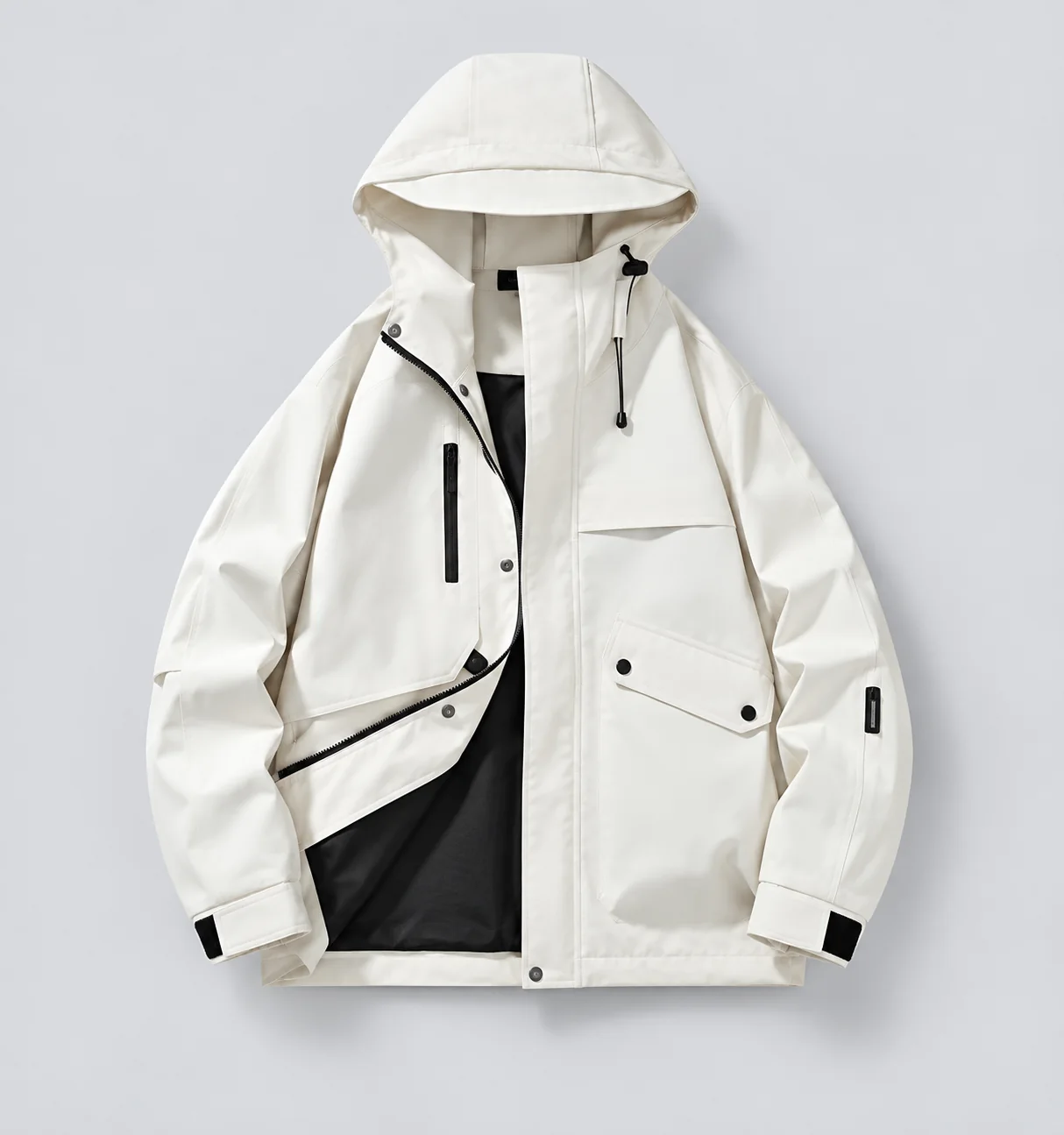
Front closure: exposed zipper, storm flap, water-resistant zipper, zipper garage and chin protection.
Pocket design: welt, flap, bonded, water-resistant zipper or internal pocket construction.
Hood and adjustment: brim shape, volume adjustment, drawcord routing, cuff closure and hem adjustment.
Brand claim and verification: agreed wording, required test method, testing party and acceptable documentation.
Hydrostatic head and breathability: use numbers with context
Hydrostatic head and moisture-vapour measurements can be useful comparison points, but they should not be treated as standalone promises. Results vary by test method, specimen preparation, fabric configuration and laboratory. A buyer should ask which method is being used, whether the value applies to the finished fabric and how the garment construction supports the intended performance claim.
Breathability also depends on design. Pit zips, mesh pocket bags, fit, activity level and the layers worn underneath affect comfort. For this reason, a good product brief pairs laboratory requirements with a realistic wear scenario.
Plan for care, wear and claim durability
A water-repellent finish may change after abrasion, dirt, washing and drying. The care label and customer communication should explain practical maintenance without making promises that the product cannot sustain. If a program relies on a particular finish or performance retention, define wash testing and evaluation criteria before bulk approval.
Frequently asked questions
Can a jacket be water-repellent but not waterproof?
Yes. A jacket can shed light rain at the surface but still allow water through seams, openings or the fabric system during longer exposure.
Do all waterproof jackets need seam tape?
A waterproof claim normally requires a deliberate seam-sealing strategy. The appropriate extent depends on the claim, design and intended use, but untreated sewn seams are typical entry points for water.
What should a buyer include in an RFQ?
Include end use, target claim, material direction, seam requirement, key features, size range, colours, estimated quantity, desired testing and target delivery window. This gives suppliers enough information to quote a technically relevant construction.
Next step
RASKOR can review a jacket reference or product brief with you before sampling. Send the target user, weather scenario and key features, and we can help identify the material and construction questions that should be resolved before a production quotation.