
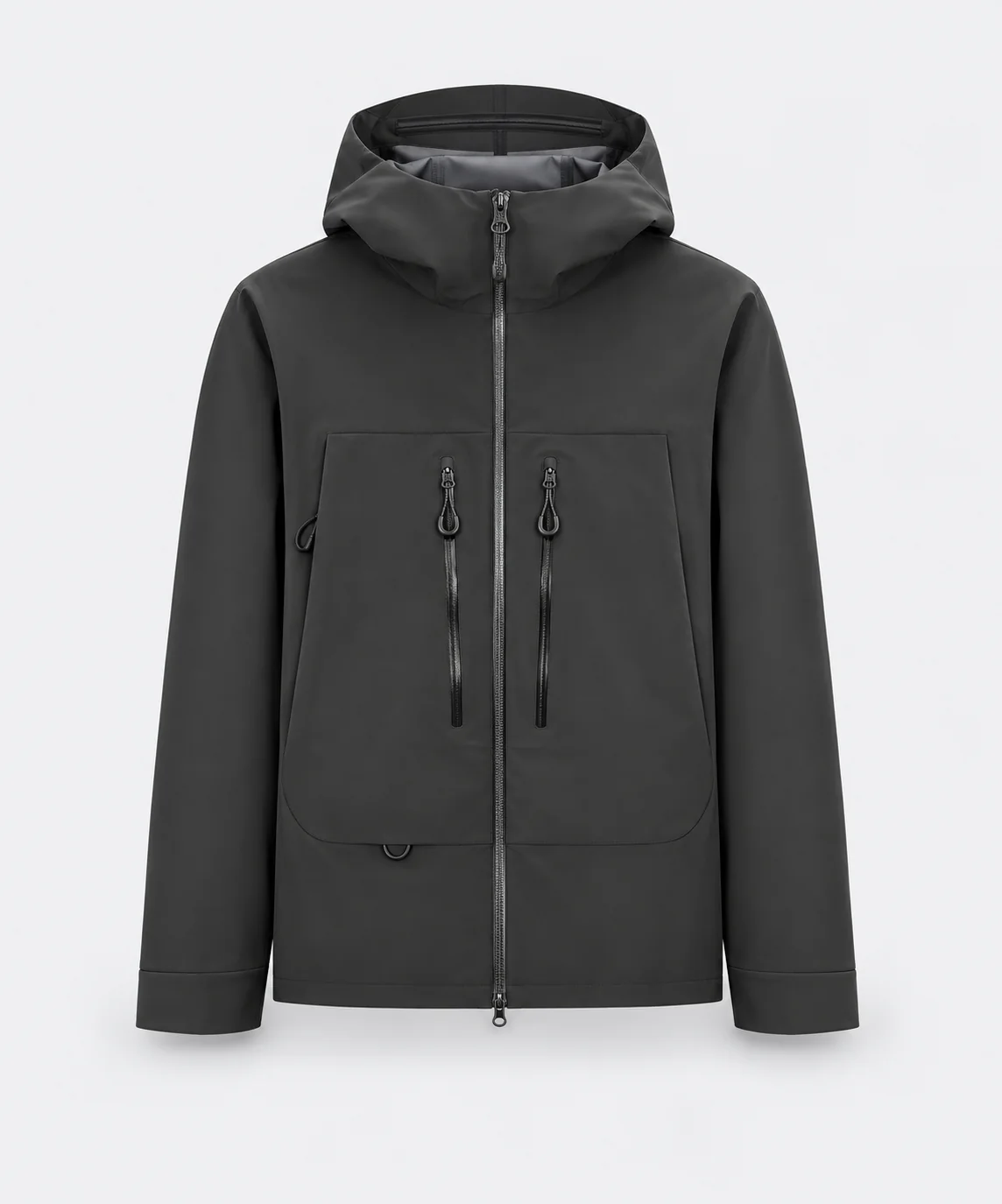
A packable waterproof jacket must protect the wearer from changing weather without becoming heavy, bulky or difficult to carry. For outdoor brands, this makes development more complex than simply selecting a waterproof fabric and adding a hood.
A successful packable shell needs to balance low weight, compact packed volume, weather protection, comfort, ventilation, durability and a production-ready private-label specification. A travel jacket may prioritize easy storage and a quiet hand feel. A cycling shell may need longer back coverage and better access while riding. A fast-hiking jacket may require stronger fabric, a more precise hood and improved backpack compatibility.
This guide explains the main decisions brands should make before requesting samples or quotations from a packable waterproof jacket manufacturer.
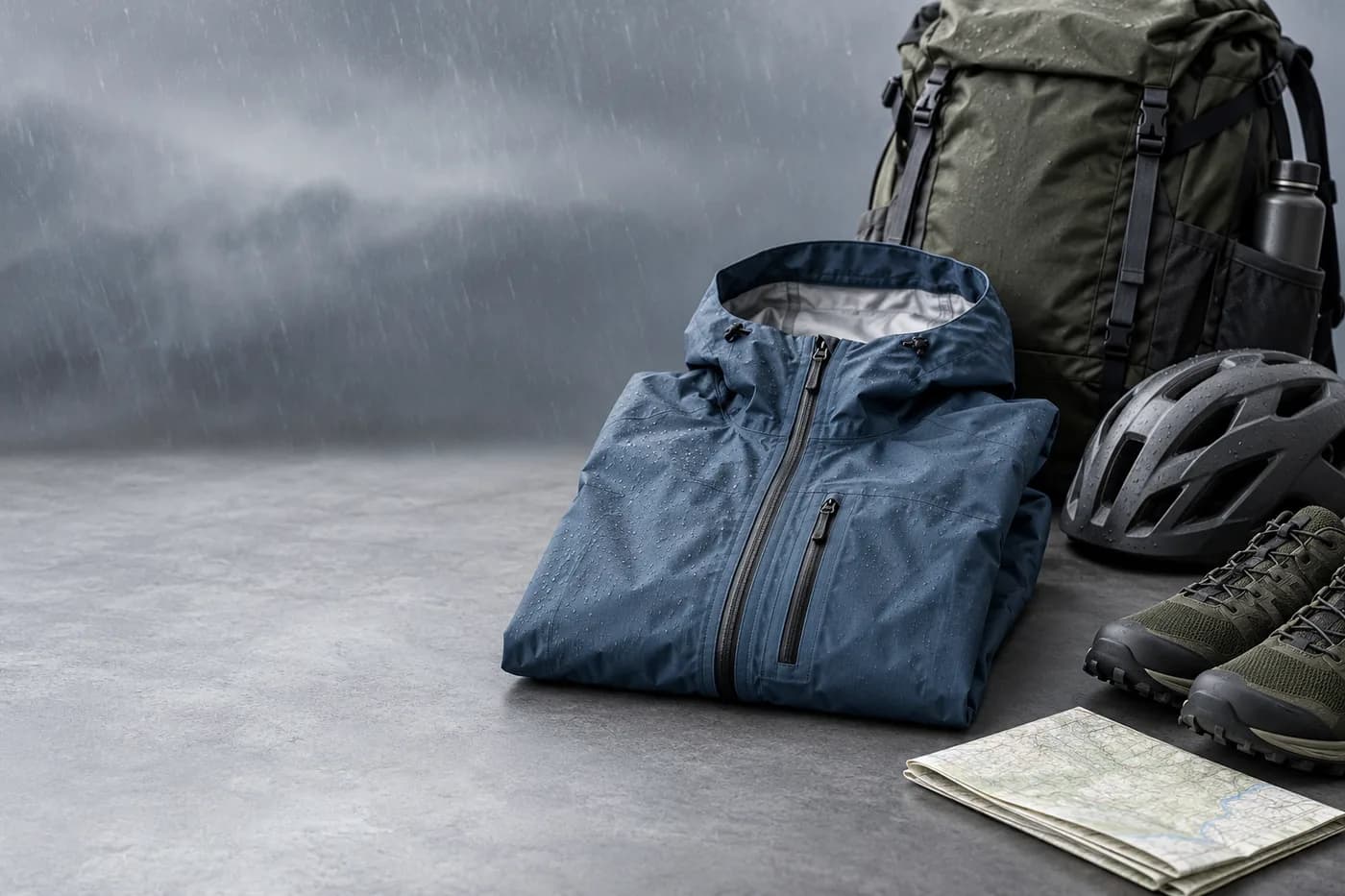
Start with the intended use
The first development step is to define where and how the jacket will be used. “Lightweight waterproof jacket” can describe very different products.
Travel jackets
Travel users usually need a jacket that folds into a small bag or pocket, works over light layers, has a clean appearance and provides practical protection during short periods of rain. Fabric hand feel and appearance may matter as much as weather resistance because the garment is also worn on public transport, in hotels and in daily city settings.
Cycling jackets
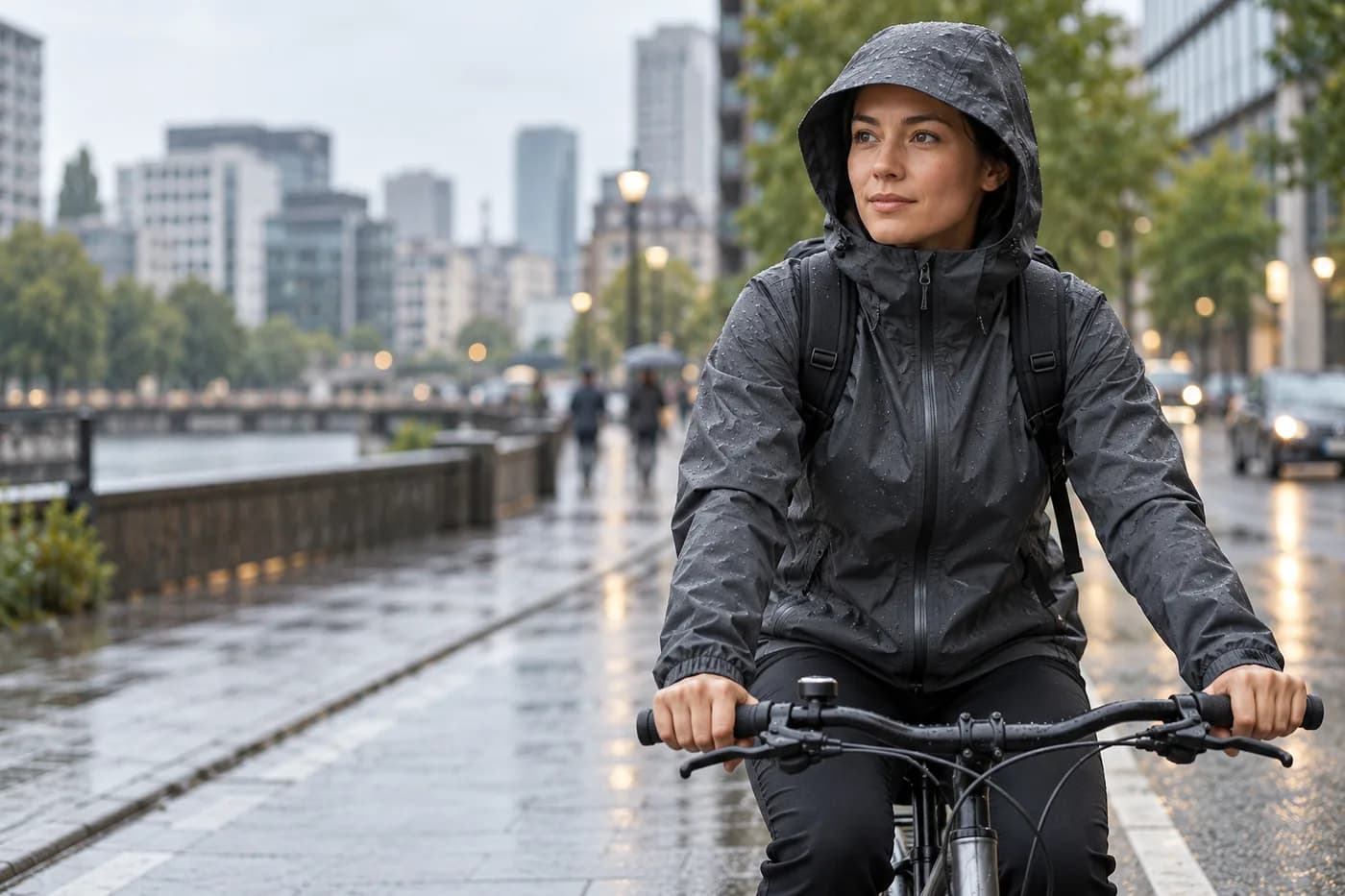
Cycling creates different requirements. The jacket may need a slightly longer back hem, articulated sleeves, secure pockets, adjustable cuffs and a close but non-restrictive fit. The front zipper, hood and pocket placement should be reviewed while the wearer is in a riding position rather than only on a standing model.
Fast-hiking jackets
Fast hiking and lightweight trekking require a careful balance between low weight and durability. Review compatibility with backpack straps, hood stability, shoulder abrasion, range of motion and ventilation during higher-output movement. Avoid adding pockets or hardware that increases weight without serving a real use case.
Choose between 2.5-layer and 3-layer construction
Construction affects weight, durability, comfort and cost. Two common choices for packable waterproof jackets are 2.5-layer and 3-layer systems.
2.5-layer shells
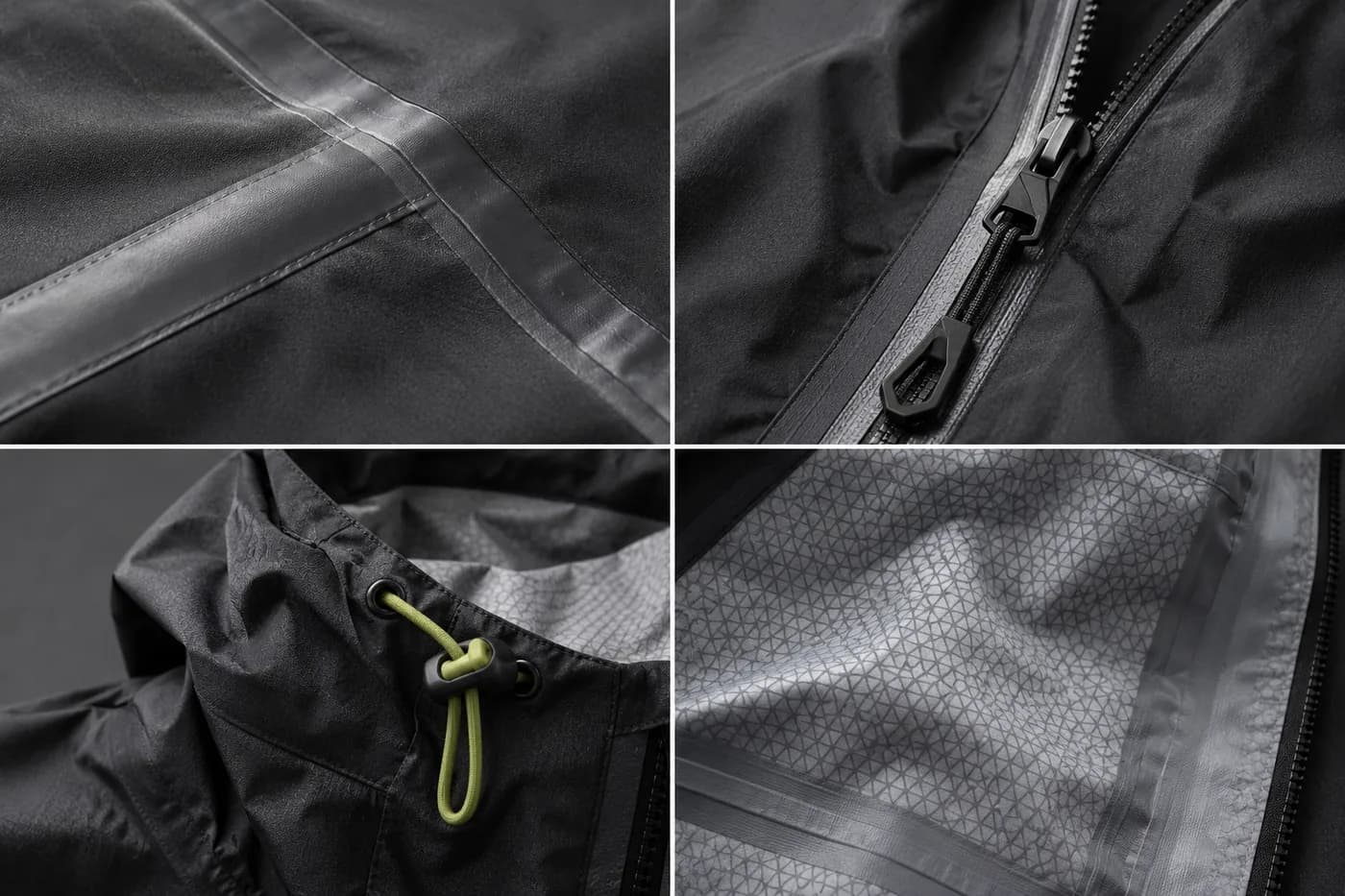
A 2.5-layer shell normally combines an outer face fabric, a waterproof-breathable membrane or coating and a partial protective print or half-layer on the inside. Typical advantages include lower weight, smaller packed volume and good suitability for travel or emergency rain protection.
Potential limitations include a less comfortable inner surface against bare skin and lower abrasion resistance than a heavier three-layer construction. The final result depends on the fabric package, pattern, seam sealing and production quality.
3-layer shells
A 3-layer shell bonds the outer textile, membrane and inner protective layer into one construction. It may offer better durability, a more stable internal structure and improved suitability for frequent backpack use. Trade-offs can include higher weight, larger packed volume and more demanding material and seam-tape selection.
Neither construction is automatically better. The correct choice depends on the intended market, activity, frequency of use, price position and performance requirements.
| Construction | Suitable direction | Advantages to review | Trade-offs to review |
|---|---|---|---|
| 2.5-layer shell | Packable travel or light rain style | Low weight and compact storage | Inner hand feel and durability need review |
| 3-layer shell | Frequent outdoor or backpack use | Stable construction and durability | Weight, cost and packed volume |
Balance weight and packed volume
Packability is influenced by more than fabric thickness. The final packed size depends on the entire garment system, including face fabric, membrane, seam tape, zipper size, hood structure, pocket construction, elastic and cord hardware.
Define a target range rather than using an unsupported term such as “ultralight.” A useful brief can include a target garment weight, packed dimensions, intended size range, minimum durability expectations, pocket capacity and whether the jacket must fit inside a cycling jersey pocket, travel bag or backpack.
A lightweight fabric may reduce weight but create challenges in sewing, seam sealing or abrasion resistance. A smaller zipper may improve packability but require more careful handling during production. Final values should be confirmed after sampling because pattern size, trims and construction details affect the result.
Select the fabric system carefully
A waterproof jacket normally combines an outer textile with a membrane or coating. The outer layer provides appearance, structure and abrasion resistance, while the inner system supports waterproofing and moisture management.
Ask whether the fabric is suitable for seam sealing, how it feels after repeated folding, whether its surface is matte or glossy, and whether its colour remains stable after finishing. Confirm whether the hand feel is appropriate for direct skin contact and whether the material documentation supports the claims planned for the market.
A durable water-repellent finish can help water bead on the outer surface, but it does not replace the waterproof membrane or sealed seams. The full garment system must be evaluated together. If the brand plans a chemical or sustainability claim, define its scope and evidence separately rather than using a broad unsupported statement.
Design the hood for real use
A packable hood should protect the head without becoming too bulky when stored. Review rear volume adjustment, brim shape, collar height, chin protection, visibility when turning the head and compatibility with the intended headwear.
For travel use, a simple low-profile hood may be sufficient. For cycling or fast hiking, the hood may need more stable adjustment and better peripheral visibility. Check the collar with the zipper fully closed. A waterproof jacket can still feel uncomfortable if the collar is too high, too stiff or poorly shaped around the chin.
Review zippers, pockets and cuffs
Small components strongly affect user experience and packed volume.
Zippers
Review water resistance, flexibility, ease of operation, puller size, glove compatibility and overall visual direction. A waterproof zipper may reduce the need for a storm flap, but it can also increase stiffness. A coated standard zipper with a protective flap may offer a different balance.
Pockets
Travel jackets may need secure pockets for phones, cards or passports. Cycling jackets may require access while riding. Fast-hiking jackets should be reviewed with backpack straps and hip belts. Every pocket adds fabric, sewing and a potential water-entry point, so pocket count should follow the use case.
Cuffs and hem
Adjustable cuffs and hems help reduce wind and rain entry. Test them with bare hands and light gloves. Low-profile tabs, elastic binding or internal adjustment can preserve a clean urban appearance while retaining useful control.
Keep seam sealing and pattern engineering in the brief
Waterproof fabric can still fail when seams, zipper openings or hood intersections are not properly designed. The tech pack should identify seam construction, tape width, sealing areas, stitch density, seam allowance, reinforcement points, zipper treatment and hem construction.
During sampling, inspect the hood-to-collar connection, shoulder seams, armholes, pocket openings, cuff ends, hem corners and zipper intersections. These areas often reveal construction problems earlier than a general visual inspection.
Test the jacket before confirming production
A sample should be reviewed in conditions that match the intended use. Test fit while reaching forward, carrying a backpack, sitting on a bicycle, raising both arms and wearing the planned base or mid-layer.
Record packed dimensions, packed weight, ease of folding and whether the jacket can be repacked when damp. Depending on the brief, the development team may evaluate surface wetting, resistance to water penetration, seam leakage, zipper leakage, hood coverage, cuff and hem protection, colourfastness, dimensional stability and seam-tape adhesion.
The applicable test methods and acceptance values should be agreed before testing. A fabric report is not automatically a finished-garment result, and one laboratory result does not prove every part of the jacket performs in the same way.
Wear trials add information that laboratory reports cannot. Use a defined scenario and record hood stability, pocket access, overheating, noise, range of motion and water entry. Specific observations are easier to convert into pattern or construction revisions than general feedback such as “feels good.”
Prepare a clear OEM tech pack
A clear tech pack reduces misunderstandings and speeds supplier communication. Include the product name and style number, intended application, reference images, flat sketches, measurement chart, fabric composition, fabric weight target, seam-sealing instructions, zipper and trim references, pocket details, hood construction, label placement, packaging requirements, colour references, test requirements and sample milestones.
The bill of materials should connect each component to an approved reference or alternative. “Black waterproof zipper” is not specific enough when different gauges, tapes, sliders and finishes are available. If the project starts from an existing factory style, identify exactly what remains unchanged. A different fabric can alter shrinkage, seam appearance, tape adhesion, hood structure and fit.
Ask the supplier the right questions
Before selecting a packable waterproof jacket manufacturer, ask:
- Can you develop both 2.5-layer and 3-layer shell options?
- Which fabrics are suitable for low-volume packable jackets?
- How do you handle seam sealing on lightweight materials?
- Can the pattern be adjusted for travel, cycling or hiking?
- How are waterproof zippers and pocket openings reviewed?
- What information is needed before sample development?
- Which details commonly increase weight or packed volume?
- Can you provide fabric and trim documentation?
- How will sample comments be recorded and revised?
- Which product details must be confirmed before bulk production?
A structured conversation helps both sides understand whether the supplier is a suitable development partner.
Common development mistakes to avoid
Treating an image as a complete specification
A reference can show proportion and mood, but it does not define measurements, internal construction, materials or performance. Annotate what should be followed and what is only inspiration.
Combining incompatible priorities
Extremely soft hand feel, very low price, high waterproof performance, strong stretch, tiny minimums and immediate delivery may not fit one material. Rank priorities so suppliers can propose realistic options.
Adding technical features without a use case
More zippers, pockets and adjusters do not automatically create a better urban jacket. Every feature adds weight, cost, failure points and visual information.
Approving colour only on screen
Digital colour is useful for communication but unreliable for final textile approval. Use an agreed physical standard and review shell, tape, trim and thread together.
Skipping a representative pre-production sample
A sample made from substitute fabric or trims cannot close every bulk-production question. Before release, confirm what differs from bulk and whether those differences affect fit, taping, appearance or testing.
RFQ checklist for a packable waterproof jacket
| RFQ field | Information to provide |
|---|---|
| Product role | Wearer, climate, activity and intended protection |
| Style direction | Silhouette, length, fit, hood, pocket map and visible technical level |
| Materials | Construction, weight, hand, stretch, surface, lining or insulation direction |
| Performance | Intended claims, test methods, specimen and acceptance criteria |
| Private label | Logo method, labels, care content, packaging and destination markets |
| Commercial scope | Quantity by style, colour and size; target price and destination |
| Development | Reference sample, tech pack status, sample stages and approval contacts |
| Timing | Target launch, delivery window and fixed campaign milestones |
If some fields are open, label them as open. A supplier can propose options when it understands the decision boundary. Hidden assumptions create slower quotations and more sample revisions.
Frequently asked questions
What is the best construction for a packable waterproof jacket?
There is no single best construction. A 2.5-layer shell may suit lightweight travel and emergency rain protection, while a 3-layer shell may be more appropriate for frequent backpack use or demanding outdoor activity.
Is a lightweight waterproof jacket suitable for cycling?
It can be, provided the pattern includes suitable sleeve mobility, back coverage, cuff adjustment and pocket placement. The garment should be tested in an actual riding position.
How small should a packable rain jacket be?
The target depends on the product category. Define a packed dimension suitable for the intended travel bag, cycling storage system or hiking kit rather than using a universal size.
Does waterproof fabric make the whole jacket waterproof?
No. Waterproof performance also depends on seams, zippers, hood construction, cuffs, hem and production quality.
What should be included in a waterproof jacket tech pack?
At minimum, include the garment sketch, measurements, fabric direction, construction details, seam-sealing requirements, zipper references, colour standards, labels and testing expectations.
Should a brand choose a 2.5-layer or 3-layer jacket for private label?
The choice should follow the product use case and price position. Compare weight, durability, hand feel, packed volume and construction complexity during sampling.
Conclusion
Developing a packable waterproof jacket requires more than choosing a lightweight fabric. The most reliable process begins with a clear use case and continues through construction selection, fit testing, component review, seam engineering and sample evaluation.
For travel, cycling and fast hiking, the priorities may be different, but the development principle is the same: every feature should support a real user requirement. Outdoor brands preparing a lightweight rainwear collection should confirm the intended market, activity, target packed size, fabric direction, weather protection and private-label details before requesting a sample.